
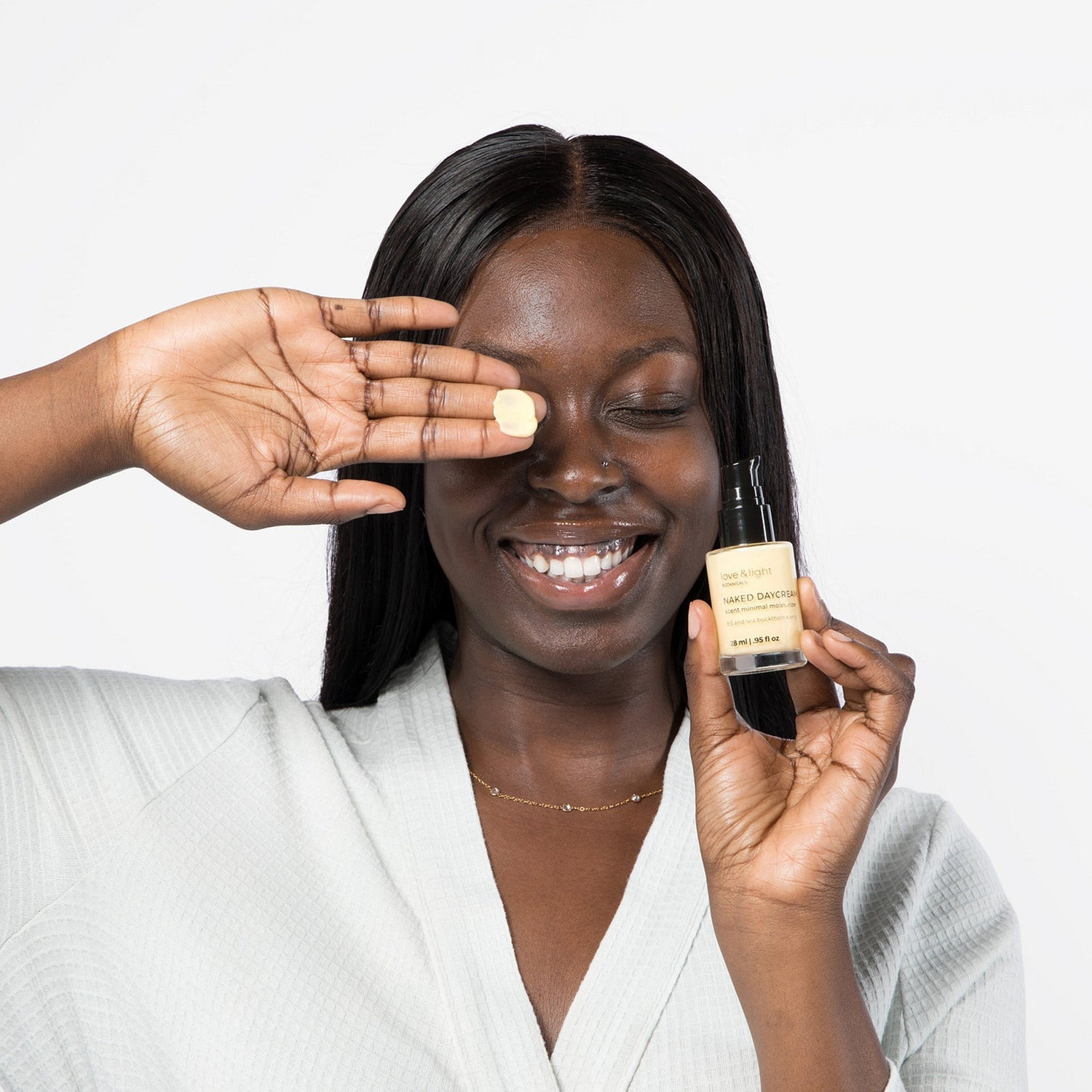
In a fast-paced world, skincare routines often become overly complex, overwhelming, and difficult to maintain. Beauty aisles and online shops are filled with endless options, each promising dramatic results through elaborate, multi-step regimens. But when it comes to supporting healthy, resilient skin, science suggests that more isn't always better.
In many cases, simplicity leads to better outcomes. A routine built around gentle cleansing, targeted treatment, and consistent hydration is often easier for skin to tolerate and easier to stick with. At Love and Light Botanicals, we believe effective skincare starts with thoughtful formulation and a simple, science-informed approach. Here's why simplicity matters — and how the right botanical ingredients support long-term skin health.
Why less is more in skincare
The overwhelming skincare maze
Walk into any beauty retailer or scroll through skincare online and you'll quickly encounter a dizzying number of products. Cleansers, toners, serums, exfoliants, masks, creams, oils, and elixirs — each positioned as essential, each paired with bold claims that more products lead to better results.
Research does not consistently support this idea. Using too many products, especially those with overlapping or aggressive active ingredients, can increase the risk of irritation and make it harder to understand what your skin truly needs. There's also a commercial reality at play: the beauty industry profits from complexity and perpetual newness, not from routines that are simple and sustainable.
A simpler routine built with well-chosen, botanically derived ingredients often supports healthier skin more effectively than frequent experimentation. When you reduce the number of variables in your routine, it becomes easier to identify what's working — and what isn't.
The science behind a simple skincare routine
At the core of a simple routine is efficacy. Each step serves a clear purpose and supports the skin rather than overwhelming it.
- Maintaining skin barrier integrity: The skin barrier is made up of lipids that help retain moisture while protecting against external stressors.[1] When the barrier is disrupted, skin may feel dry, uncomfortable, or more reactive. Overloading the skin with too many products or harsh ingredients can compromise this balance. A streamlined routine focused on gentle care helps preserve barrier function and support lasting hydration.
- Reducing sensitivity: The more products and ingredients you introduce, the greater the chance of incompatibility or irritation. Redness, itching, and inflammation are often signs that skin is overwhelmed. Simplifying your routine reduces unnecessary exposure and helps sensitive skin feel calmer and more resilient over time.
- Allowing ingredients to work: Skincare products are formulated with active ingredients intended to support specific concerns. The skin has a natural absorption limit, and layering too many products can interfere with how well those ingredients perform. A simple routine allows each formula to do its job without competition.
- Consistency matters: Skin renews itself in cycles of roughly 28 days,[2] which means visible changes take time. A routine that is easy to follow encourages consistency — and consistency is one of the most important factors in seeing meaningful results. Simpler routines are more sustainable, and sustainability leads to healthier skin over the long term.
Building a positive aging routine that lasts
Our Positive Aging Skincare approach
A simple, science-based routine doesn't mean doing less for your skin. It means doing what matters most — with ingredients and formulas chosen for their compatibility with sensitive skin, not for trend appeal.
Our three-step approach is built to be flexible, minimal, and effective:
- Cleanse: Start with a gentle cleanser that removes impurities without stripping the skin's natural oils. Cleansing creates a clean, balanced foundation for the rest of your routine — and sets the tone for how your skin responds to everything that follows.
- Treat with intention: Choose one or two targeted products designed to support your specific needs, whether that's hydration, tone support, or antioxidant protection. Using fewer, well-formulated treatments is often more effective than layering multiple actives that compete with each other.
- Moisturize: Hydration helps support the skin barrier and maintain comfort throughout the day. A botanical-rich moisturizer or facial oil can help lock in moisture and support skin balance — whether you prefer a lightweight daytime option or a more nourishing evening formula.
- Protect: During periods of higher sun exposure, daily sun protection plays an important role in maintaining skin health. Applying a broad-spectrum SPF over your routine helps protect against environmental stress.
- Occasional treatments: Masks, exfoliants, and targeted treatments can be used as needed — but they should complement, not complicate, your routine. Think of them as seasonal additions, not daily essentials.
The journey to positive aging skincare
Positive aging is rooted in intention, consistency, and respect for the skin's natural processes. A simple routine allows you to focus on nourishing your skin with thoughtfully chosen botanical ingredients, supporting the skin barrier, and maintaining balance over time — rather than chasing the next trend or reacting to every new launch.
By simplifying your skincare approach, you're not doing less for your skin. You're giving it space to respond, repair, and strengthen. When science and simplicity work together, skincare starts to feel sustainable — something you can actually maintain for the long run.
Healthy skin isn't built overnight. It's built through daily decisions that add up over weeks, months, and years. A routine you can stick to will always outperform a complicated one you abandon.
References
- Proksch E, Brandner JM, Jensen JM. The skin: an indispensable barrier. Exp Dermatol. 2008;17(12):1063–72. doi:10.1111/j.1600-0625.2008.00786.x
- Halprin KM. Epidermal "turnover time" — a re-examination. Br J Dermatol. 1972;86(1):14–19. doi:10.1111/j.1365-2133.1972.tb01886.x