
Why product hygiene matters in your skincare routine
At Love and Light Botanicals, we believe healthy, resilient skin is shaped not only by the formulas you choose, but also by how you use them. One often-overlooked part of a supportive skincare routine is product hygiene.
Understanding why hygiene matters helps protect your skin, preserve product integrity, and ensure you're getting the most from your routine. It also plays a quiet but meaningful role in supporting the skin's natural microbial ecosystem — something we'll come back to below.
A closer look at the microscopic world
Our botanical skincare formulas are made with thoughtfully selected plant extracts, vitamins, and antioxidants designed to support skin health. Once a product is opened, however, it becomes exposed to the surrounding environment.
Each time a jar or bottle is opened, microorganisms from hands, air, and surfaces can come into contact with the formula. Common culprits include gram-positive bacteria such as Staphylococcus, environmental molds, and yeasts — all of which are naturally present on skin and in household air. Over time and with repeated exposure, even small amounts of contamination can accumulate within a product.
All Love and Light Botanicals formulas are created with broad-spectrum preservatives that are organically approved and designed to be both skin- and environment-conscious. Preservative systems are tested to meet international efficacy standards.[1] Once products are in your home, however, good hygiene during application is what keeps that protection intact.
Common skincare hygiene concerns
Poor product hygiene can impact both skin comfort and product performance in several ways.
Contamination
Dipping fingers directly into jars introduces bacteria and other microorganisms from the skin's surface. Over time, these can multiply within the product and may contribute to breakouts or irritation — especially for sensitive skin.
Reduced product performance
Repeated exposure to microbes can affect the stability of active ingredients and antioxidants, which may reduce how well a product performs over time.
Increased skin sensitivity
Using contaminated products can sometimes trigger redness, itching, or discomfort. For those with sensitive or reactive skin, the threshold for this kind of reaction can be lower.
Cross-contamination
Using the same applicator across multiple products — or touching your face and then dipping back into a jar — can transfer microorganisms between products, compounding hygiene concerns over time.
Water contamination
Introducing water into products that aren't formulated with water in mind can disrupt the preservative balance and accelerate microbial growth. Avoid using wet hands to scoop product or adding water to thicken a formula that has dried out.
How packaging affects product hygiene
Packaging design plays a meaningful role in how hygienic a product is during daily use.
Pump and airless dispensers are generally more hygienic than open jars, because they minimize direct contact with the formula and limit exposure to air. Products that stay sealed until dispensed are less vulnerable to repeated contamination cycles.
Jar packaging, while aesthetically appealing, does require more mindful handling — especially for thicker creams or balms. Using a clean spatula each time is the most effective way to protect the formula.
Many of our formulas, including our Habitual hydrator, use pump dispensers specifically because they support consistent hygiene during daily use without requiring extra tools.
Period After Opening (PAO) dates — indicated by the open-jar symbol on packaging — indicate how long a product remains stable and safe for use after first opening. Respecting these dates is a simple but important part of product care.
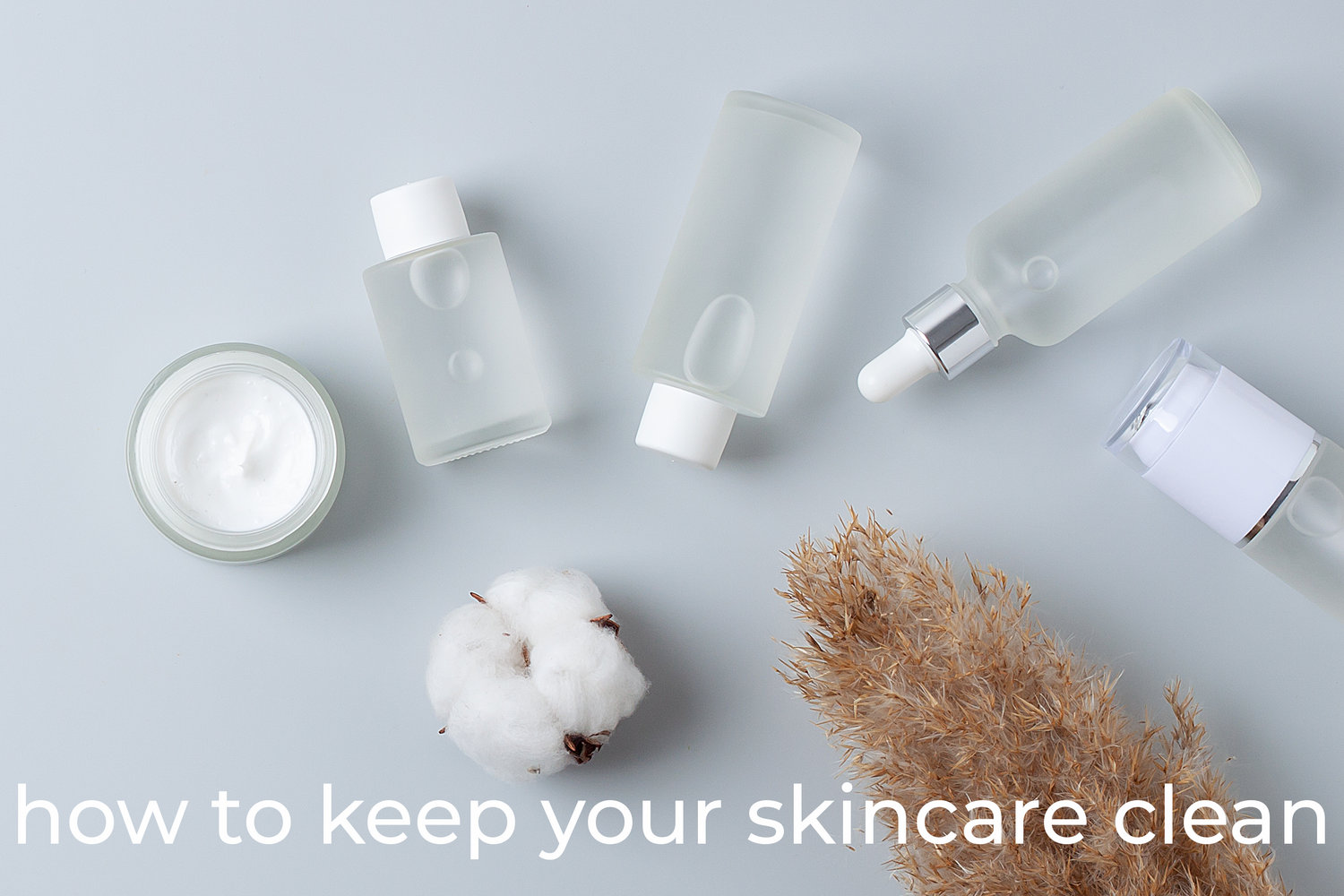
How to keep your skincare clean
Simple ways to protect your products
Good skincare hygiene doesn't need to be complicated. Small, consistent habits make a meaningful difference.
Wash your hands before your routine
Clean hands before applying any skincare product significantly reduces the risk of introducing microorganisms into your formulas or directly onto your skin.
Use a clean skincare spatula for jar products
A spatula instead of fingers limits direct contact with the product. To keep your spatula clean: wash it with warm, soapy water after each use, allow it to dry completely before the next use, and optionally sanitize with rubbing alcohol. Avoid introducing water or alcohol directly into the product.
Store products thoughtfully
Cool, dry storage away from direct sunlight and heat extends the life of most skincare products. Bathrooms are a common choice, but shower steam and temperature fluctuations can affect product stability over time. A bedside drawer or vanity away from the shower is often a better environment for your routine.
Avoid sharing skincare products
Sharing products — even with close family members — introduces different microbial profiles into the same formula, accelerating contamination and creating unpredictable conditions for sensitive skin.
Use your cleanser as the foundation
A clean face before applying any skincare product reduces the amount of bacteria and environmental debris that can transfer to your fingers and then into your formulas. This is one reason we advocate for a simple evening cleanse as the anchor of a daily routine.
A holistic approach to skincare care
Product hygiene is an important part of a holistic skincare routine. It helps protect your skin, preserve the integrity of your formulas, and extend the life of your products.
It's also connected to something deeper: the skin's natural microbial ecosystem. The skin hosts a diverse community of beneficial microorganisms that support immune function, barrier health, and comfort. Contaminated products — or products that disrupt the skin's natural pH and microbial balance — can affect this ecosystem in ways that show up as sensitivity, breakouts, or chronic irritation.[2] To learn more about how this ecosystem works, see our deep-dive on the skin microbiome.
At Love and Light Botanicals, we blend botanical wisdom with thoughtful formulation. Caring for your skincare properly supports the work your products are designed to do and helps your routine feel more intentional and effective.
Healthy skin isn't just about what you apply. It's also about how you care for the products that support it.
References
- Lundov MD, Moesby L, Zachariae C, Johansen JD. Contamination versus preservation of cosmetics: a review on legislation, usage, infections, and contact allergy. Contact Dermatitis. 2009;60(2):70–78. doi:10.1111/j.1600-0536.2008.01501.x
- Grice EA, Segre JA. The skin microbiome. Nat Rev Microbiol. 2011;9(4):244–53. doi:10.1038/nrmicro2537