
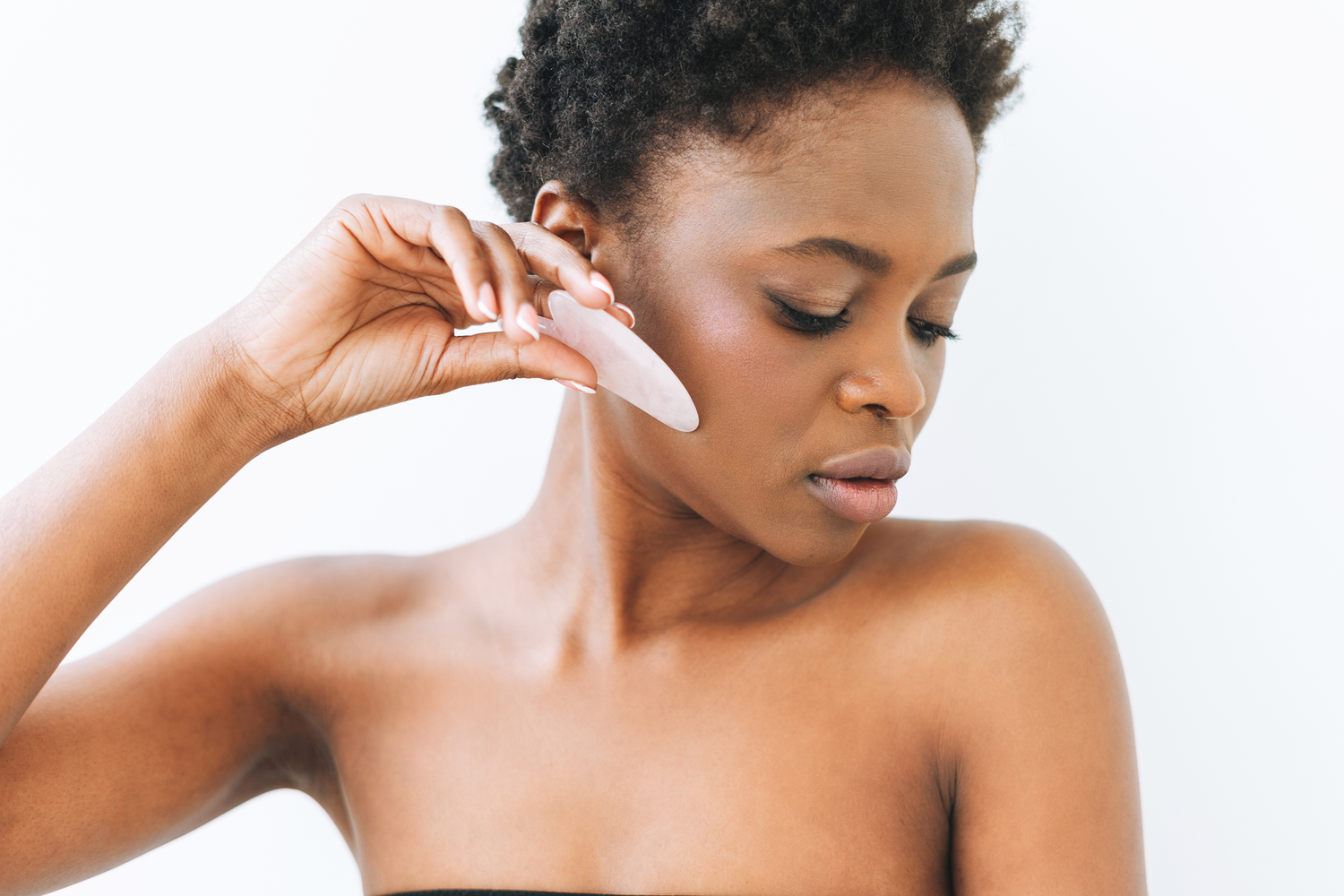
A timeless beauty ritual
In the pursuit of radiant, positively aging skin, there’s an ancient beauty secret that’s been treasured for centuries and is making a comeback in the modern world of skincare: gua sha facial massage. Rooted in traditional Chinese medicine, gua sha is a holistic technique that can complement a consistent skincare routine by supporting circulation, relaxation, and mindful self-care. Today, we’ll explore its origins, the tools used, how to incorporate it into your routine, and a simple how-to guide.
The origins of gua sha facial massage
Gua Sha, which translates to “scraping,” has been practiced for thousands of years as a natural technique traditionally used to support circulation throughout the body. Over time, gentler techniques made their way into facial care. The idea behind gua sha facial massage is simple: by using light, controlled strokes with a smooth tool, you can encourage microcirculation at the skin’s surface. We explore the clinical research behind these effects in more depth in our article on the science behind gua sha facial massage [1, 2]. Many people also enjoy gua sha for the relaxation it brings, since facial tension can influence how skin looks and feels day to day.
The tools: understanding your gua sha stone
To perform gua sha facial massage, you’ll use a gua sha tool. These tools come in various shapes and materials and are often made from natural stones such as jade, rose quartz, and obsidian. From a skin physiology standpoint, the specific stone is less important than the tool’s smoothness, shape, and how comfortably it fits your hand. A well-shaped tool helps guide consistent, gentle pressure and allows the tool to follow the contours of the face without pulling the skin.
Benefits of gua sha facial massage
When practiced gently and consistently, facial massage techniques like gua sha may offer several supportive benefits. Light massage can increase microcirculatory activity at the skin’s surface, which supports healthy-looking vitality over time [1, 2]. Gentle strokes may also help reduce temporary puffiness by supporting natural fluid movement. Facial massage has been shown to increase facial skin blood flow and support relaxation of facial muscles, which can soften the appearance of tension-related tightness over time [3]. Using a tool during application can also help distribute serums or facial oils evenly while encouraging a more mindful, gentle touch. These benefits are gradual and are best viewed as part of a consistent skincare and wellness routine.
How to perform gua sha facial massage
Begin with clean, well-hydrated skin and apply a facial oil or serum to create slip so the tool glides smoothly. Using a well-shaped gua sha tool helps ensure consistent, gentle pressure and allows the stone to follow the natural contours of the face without pulling the skin.
Start at the neck with upward strokes, working from the center outward toward the jawline. Move to the jawline and chin using slow, upward and outward motions, repeating each stroke three to five times.
Continue to the cheeks and under-eye area with especially light pressure. Sweep across the forehead from the center outward, then finish with gentle movements at the temples to encourage relaxation.
After use, wash your gua sha tool with mild soap and warm water or wipe with alcohol, then allow it to dry fully before storing.
 |
The gift of self-care
Incorporating gua sha into your skincare routine is less about dramatic change and more about consistency and care. It creates space to slow down, support circulation, and engage with your skin in a more intentional way. When practiced gently and regularly, gua sha can become a grounding ritual that complements a simple, supportive skincare routine and reinforces the idea that healthy skin is nurtured through patience, consistency, and mindful care.
References
- Nielsen A, Knoblauch NTM, Dobos GJ, Michalsen A, Kaptchuk TJ. The effect of Gua Sha treatment on the microcirculation of surface tissue: A pilot study in healthy subjects. EXPLORE. 2007;3(5):456–466.
- Dubinskaya AD, Yurova OV, Rogatkin DA, et al. Changes in microcirculation during gua sha massage. Bulletin of Rehabilitation Medicine. 2023;22(2):112–119.
- Koyama S, Kobayashi S. The effect of facial massage on facial skin blood flow and elasticity. Journal of Physical Therapy Science. 2016;28(1):90–93.