
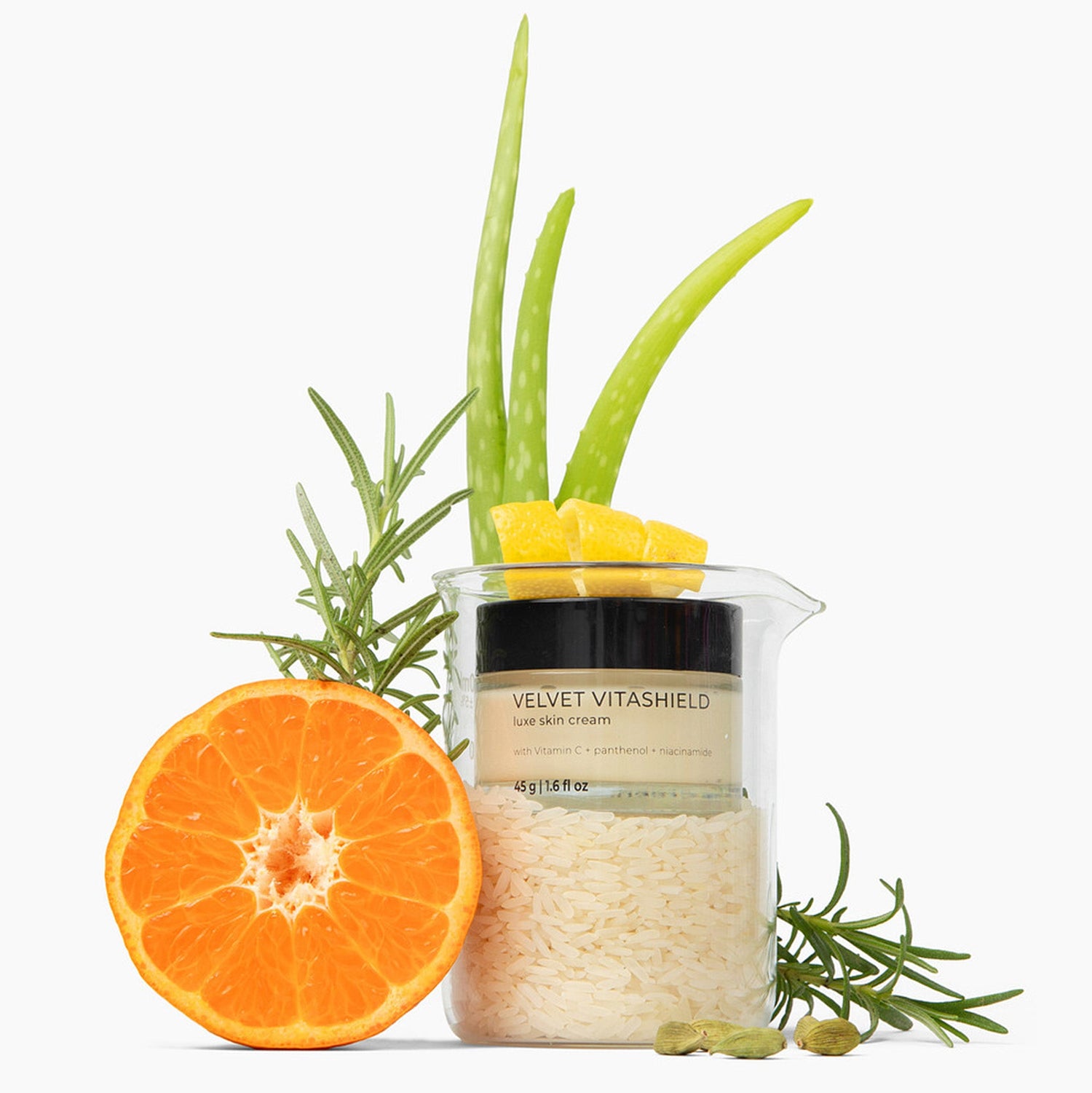
The power of phytonutrients:
At Love and Light Botanicals, we love sharing the science behind your skincare routine. Our approach is grounded in research over hype, so you can make informed choices that truly support your skin. Curious about a specific ingredient or skin concern? We’re always exploring the science behind skin wellness and love hearing what you’d like us to dive into next.
Why your skin loves vitamins A, E, and C
Interest in phytonutrients and skin-supportive vitamins isn’t just a passing trend. It reflects a growing understanding of how nature-derived compounds can work in harmony with the skin.
Vitamins A, E, and C are essential nutrients that play important roles in skin comfort, resilience, and radiance. When sourced from organic botanical ingredients, they come packaged with a complex mix of phytonutrients that support the skin in a more balanced way than isolated synthetic versions.
Let’s explore how these three vitamins support skin health, both topically and through diet.
The glow-boosting trio: Vitamins A, E, and C
-
Vitamin A: supporting smoothness and renewal
- What it does: Vitamin A supports skin renewal and helps maintain smooth-looking, even skin. In skincare, synthetic retinol is often used for this purpose, but it can feel intense for sensitive skin. Botanical alternatives provide similar support in a gentler way, making them better suited for consistent use.
- Natural sources: Orange and green vegetables like carrots, sweet potatoes, spinach, chard, and amaranth are rich in beta-carotene, which the body naturally converts into vitamin A. Including these foods in your diet supports skin health from within.
- Topical botanical sources: Plant-derived ingredients such as bakuchiol and raspberry seed oil offer vitamin A-like support while also helping seal in moisture. These ingredients are often better tolerated by sensitive skin and support skin comfort alongside renewal.
-
Vitamin E: hydration and protection
- What it does: Vitamin E is a powerful antioxidant that helps protect the skin from environmental stressors like pollution, wind, and sun exposure. It also plays an important role in maintaining moisture balance, helping skin feel soft and supported, especially during periods of increased sun exposure or seasonal changes.
- Natural sources: Nuts, seeds, avocados, and leafy greens are excellent dietary sources of vitamin E. Almonds, sunflower seeds, and spinach are simple additions that support skin wellness from the inside out.
- Topical sources: Vitamin E derived from ingredients like rosemary extract or sunflower oil tocopherols helps nourish and protect the skin barrier. When thoughtfully formulated, vitamin E supports hydration without feeling heavy or greasy. Our 3-step healthy skincare routine is fortified with Vitamin E from organic rosemary extract.
-
Vitamin C: brightness and resilience
- What it does: Vitamin C supports a brighter, more even-looking complexion and plays a role in supporting collagen health. It also functions as an antioxidant, helping skin defend against environmental stress.
- Natural sources: Citrus fruits, strawberries, kiwis, and bell peppers are rich in vitamin C. Eating a variety of colorful fruits and vegetables helps provide ongoing antioxidant support.
- Topical sources: Botanical ingredients such as sea buckthorn berry oil and cardamom offer naturally occurring vitamin C alongside additional phytonutrients. These sources tend to be gentler and are often better suited for sensitive or reactive skin.
Why organic botanical phytonutrients support skin health
While synthetic versions of vitamins are widely available, organic botanical ingredients offer unique advantages, especially for sensitive skin.
- Bio-availablity: Plant-based ingredients are often more easily recognized by the skin because they come in a complex, naturally balanced form. Similar to whole foods, botanical ingredients contain a variety of phytonutrients that work together, supporting overall skin function rather than targeting a single pathway in isolation.
- Gentle by nature: Sensitive skin benefits from ingredients used at responsible levels and in skin-compatible forms. Botanical ingredients allow formulators to support skin health without relying on high concentrations of harsh actives. This approach helps reduce the likelihood of irritation while still delivering meaningful results.
- A more thoughful lifecycle: Many botanical oils are created through upcycling food byproducts, such as apricot or plum kernels. Using organic, non-GMO ingredients also supports farming practices that reduce reliance on pesticides and synthetic fertilizers, benefiting both skin and the environment.
Embracing nature's intelligence
As a skin wellness brand, we focus on the science behind ingredients and the way they interact with the skin over time. By working with organic botanical phytonutrients, we aim to support skin health in a way that feels intuitive, nourishing, and sustainable.
Skincare doesn’t need to overwhelm the skin to be effective. When thoughtfully formulated, plant-based ingredients can help support balance, resilience, and a healthy glow.
Nourish your skin from the inside out, and let your routine reflect care, intention, and respect for your skin’s natural processes.