
We love sharing the science behind your skincare routine. With us, it’s always research over hype, so you can make informed choices that support long-term skin health.
Niacinamide, a form of vitamin B3, is one of the more quietly effective ingredients in skincare, less flashy than retinol, less finicky than vitamin C, but backed by a genuinely solid body of research. It's also one of the reasons three of our formulas, Bright eyes, Velvet vitashield, and Florafirm barrier repair essence, work as well as they do for sensitive, barrier-compromised skin.
What niacinamide actually does
Niacinamide supports skin through several distinct mechanisms rather than a single action. Topical application has been shown to increase ceramide and free fatty acid production in the stratum corneum, the outermost skin layer responsible for holding onto moisture and keeping irritants out, which helps reduce transepidermal water loss and supports overall barrier function.[1]
In a 12-week, double-blind clinical study, 5% topical niacinamide applied to one side of the face reduced hyperpigmented spots, red blotchiness, and skin sallowness compared to a vehicle control on the other side, while being well tolerated by study participants throughout. [2] It's also worth mentioning that Love and Light Botanicals threshold for niacinamide in our formulas is much lower than 5%, since we are formulating for sensitive skin. The goal is to strike a balance between effective, and nourishing for sensitive skin.
Why it's particularly well suited to sensitive skin
Sensitive skin is defined by a lower threshold for stinging, burning, or irritation in response to stimuli that wouldn't otherwise cause discomfort.[3] Many effective actives (retinoids, high-percentage acids, high-concentration vitamin C) come with a real tradeoff of irritation risk. Niacinamide is unusual in that its clinical research consistently reports good tolerability, even in studies specifically designed to test it against a placebo, which makes it one of the few multi-benefit actives that doesn't ask sensitive skin to trade comfort for results.[1]
Its barrier-supportive mechanism also matters here specifically. Because sensitive skin is often associated with a less resilient barrier to begin with, an ingredient that helps rebuild ceramide and lipid levels addresses a root contributor to sensitivity, rather than just calming a symptom temporarily.
Where niacinamide shows up in our formulas
We use niacinamide at low concentrations across a few different formulas, each suited to where it's needed most:
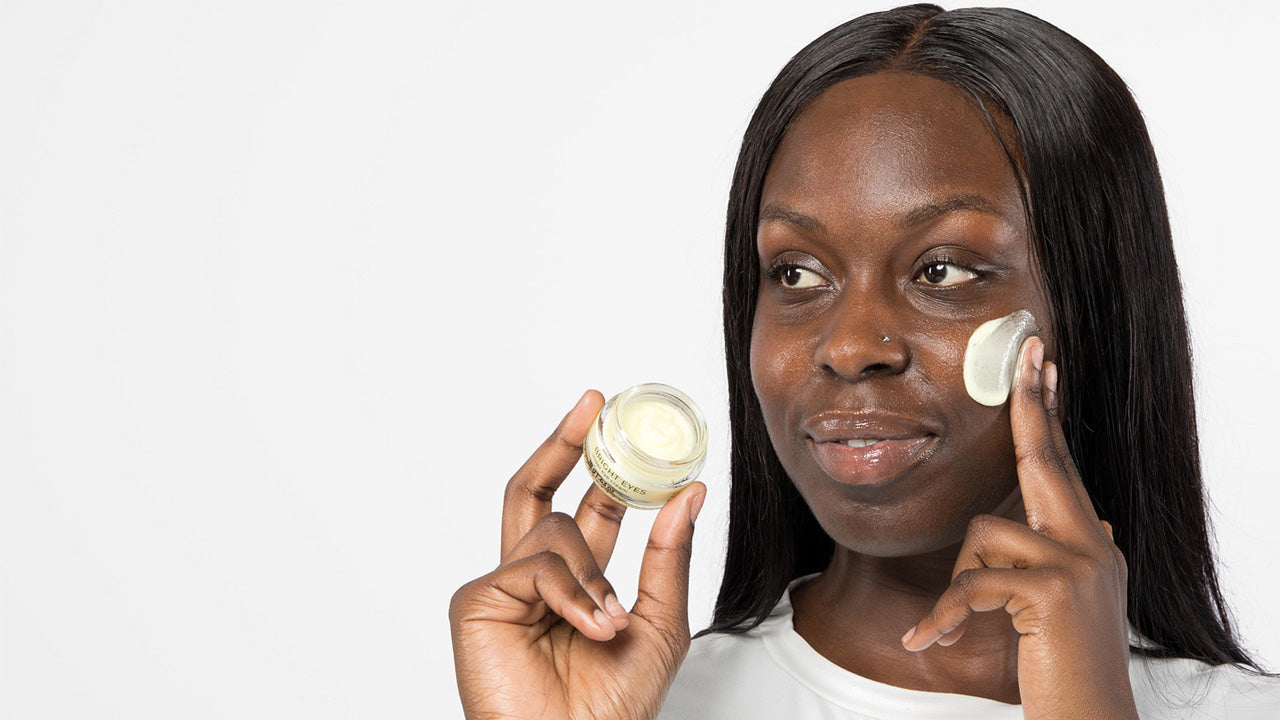
- Bright eyes pairs niacinamide with turmeric and cucumber hydrosol to soothe and support the thin, delicate skin around the eyes.
- Velvet Vitashield combines niacinamide with vitamin C for antioxidant defense and even tone in a rich, barrier-supportive night cream.
- Florafirm barrier repair essence uses niacinamide alongside fermented botanicals and aloe in a lightweight toning treatment aimed squarely at barrier repair and calming sensitivity.
Across all three, niacinamide is formulated alongside supportive, barrier-friendly botanicals rather than in isolation at a high concentration, which is consistent with how it performs best in the research: as part of a well-rounded formula, not a single-ingredient intervention.
What to expect when you start using it
Niacinamide is generally well tolerated from the start, without the gradual introduction period that actives like retinoids typically require. That said, as with any new product, patch testing and paying attention to how your skin responds over the first week or two is still good practice, especially if your skin is currently reactive or in the middle of a flare.
The takeaway
Niacinamide has one of the more well-established research profiles of any skincare active, support for barrier function, tone, and texture, paired with a strong tolerability record.[1],[2] That combination is exactly why it earned a place in three of our formulas rather than just one.
Frequently asked questions
Is niacinamide safe for sensitive skin? Yes, research consistently shows niacinamide is well tolerated, including in studies specifically evaluating it against a placebo over several weeks.[2]
What does niacinamide actually do for skin? It supports ceramide and lipid production in the skin barrier, which helps reduce water loss, and has been shown to improve tone, texture, and blotchiness with consistent use.[1],[2]
Which of your products contain niacinamide? Bright eyes, Velvet vitashield, and Florafirm barrier repair essence all contain niacinamide, each paired with complementary botanicals suited to where it's used.
References
- Gehring W. Nicotinic acid/niacinamide and the skin. J Cosmet Dermatol. 2004;3(2):88–93. https://doi.org/10.1111/j.1473-2130.2004.00115.x
- Bissett DL, Oblong JE, Berge CA. Niacinamide: a B vitamin that improves aging facial skin appearance. Dermatol Surg. 2005;31:860–866. https://doi.org/10.1111/j.1524-4725.2005.31732.x
- Misery L, Ständer S, Szepietowski JC, et al. Definition of sensitive skin: an expert position paper from the special interest group on sensitive skin of the International Forum for the Study of Itch. Acta Derm Venereol. 2017. https://doi.org/10.2340/00015555-2397