
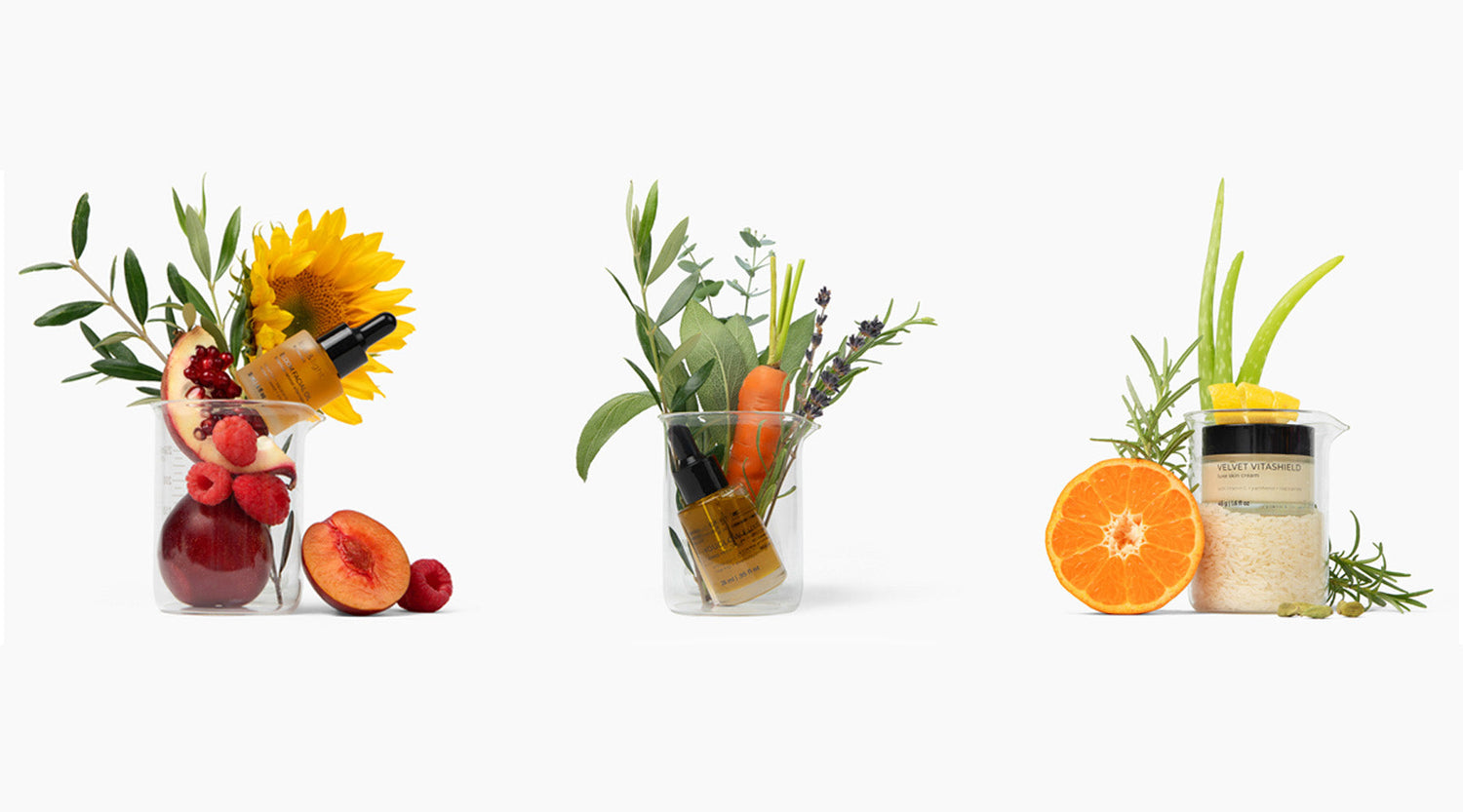
Vegan skincare for sensitive skin: why plant-based ingredients work so well
There is growing interest in vegan, botanical skincare, and for good reason. When thoughtfully formulated, plant-derived ingredients can offer meaningful benefits for sensitive skin and, in many cases, a lighter environmental footprint compared with synthetic or animal-derived cosmetic ingredients.
Rather than relying on intensity or overcorrection, vegan botanical skincare works by supporting the skin's natural functions and resilience.
What makes skincare “vegan,” and why it matters for sensitive skin
Vegan skincare simply means a formula contains no animal-derived ingredients or byproducts, no lanolin, beeswax, carmine, collagen, or animal-derived glycerin, and relies entirely on plant, mineral, or lab-created alternatives instead. For sensitive skin specifically, this often means fewer complex, variable-source ingredients that can carry their own sensitization risk, in favor of well-characterized botanical actives.
Every product we formulate is fully vegan, which lines up naturally with our broader approach: fewer unnecessary ingredients, clear sourcing, and formulas built around plant compounds the skin already knows how to work with.
Gentle on skin
Botanical skincare ingredients are often chosen for their compatibility with the skin. Many plant extracts contain naturally balanced compounds that work synergistically with the skin, helping create formulas that are gentler and more widely tolerated, especially for sensitive skin types.[1]
For those who experience irritation with conventional skincare, the cause is often linked to synthetic dyes, fillers, fragrances, or preservatives used to extend shelf life or modify skin feel in mass-produced products. Choosing effective, vegan, plant-based formulations can help reduce unnecessary exposure to these potential irritants.
It's also important to note that natural ingredients can still cause sensitivities. If you have known food or plant allergies, ingredient transparency matters. Currently, the FDA does not require full disclosure of allergens, fragrances, or patented blends in cosmetic labeling, making it important to choose brands that prioritize clear, complete ingredient lists.
A closer look at vitamin A and skin sensitivity
Vitamin A is widely used in skincare, most commonly in the form of synthetic retinoids. While prescription and cosmetic retinoids are well studied and effective, they are also known to be sensitizing for some individuals, often causing dryness, irritation, and flaking.[1]
Plant-derived vitamin A–like ingredients offer an alternative approach. Botanical sources can support skin renewal and smoothness without relying on high concentrations that may compromise the skin barrier. This gentler pathway allows for more consistent use, particularly for sensitive or reactive skin.
Effectiveness through botanical complexity
Plants naturally produce a wide range of bioactive compounds, including antioxidants and anti-inflammatory constituents. These compounds help plants defend against environmental stress, and similar mechanisms can benefit the skin when applied topically.[3]
Research shows that botanical extracts can support skin resilience by helping manage oxidative stress, a key contributor to photoaging and environmental skin damage. Because these compounds exist in complex mixtures rather than isolated forms, they may deliver benefits in a more balanced and skin-compatible way.[3]
Certain marine botanicals and algae extracts are especially notable. Algae are exposed to extreme environmental conditions and have developed strong antioxidant defense systems as a result. Compounds such as fucoxanthin and phloroglucinol have demonstrated antioxidant activity and the ability to influence tyrosinase pathways associated with hyperpigmentation.[2]
Supporting skin health without overwhelming it
One advantage of vegan, plant-based ingredients is their ability to support skin health without aggressive stimulation. When used at responsible levels, botanical actives can help improve hydration, comfort, and overall skin appearance while minimizing the risk of irritation.[1]
This makes them particularly well suited for routines focused on long-term skin health rather than short-term intensity.
Why vegan, plant-based ingredients are better for the planet
Vegan botanical skincare ingredients can also offer environmental benefits. Many plant-derived ingredients are biodegradable and have lower ecological toxicity compared with synthetic or animal-derived cosmetic raw materials.[4]
The cultivation and extraction of plant-based ingredients often require fewer resources than laboratory synthesis or animal-derived sourcing. Additionally, many botanical ingredients are created by upcycling byproducts from the food and agricultural industries, such as fruit kernels or seed oils. This helps reduce waste while creating valuable cosmetic raw materials.[4]
Smaller, vegan, botanically focused skincare brands also tend to prioritize ethical sourcing and responsible harvesting practices. Supporting these brands contributes to a more transparent, environmentally conscious, and socially responsible beauty industry.
A thoughtful approach to skincare ingredients
Vegan, plant-based skincare is not about rejecting science. It is about applying science thoughtfully. By understanding how botanical ingredients interact with the skin, formulators can create products that support barrier function, comfort, and resilience without unnecessary complexity, and without animal-derived ingredients.
When skincare works with the skin's natural biology, the results tend to feel more sustainable, both for the skin and for the planet.
Frequently asked questions
Is vegan skincare better for sensitive skin? It can be. Vegan, plant-based formulas often rely on fewer, well-characterized botanical actives rather than complex animal-derived ingredients, which tends to be gentler for sensitive or reactive skin.[1]
What does “vegan skincare” actually mean? It means the formula contains no animal-derived ingredients or byproducts, and relies entirely on plant, mineral, or lab-created alternatives.
Is vegan skincare more sustainable? Generally, yes. Plant-derived ingredients tend to be biodegradable and require fewer resources to produce than synthetic or animal-derived alternatives.[4]
References
- Stallings AF, Lupo MP. Practical uses of botanicals in skin care. J Clin Aesthet Dermatol. 2009;2(1):36–40. PMCID: PMC2958188
- Ariede MB, Candido TM, Morocho Jacome AL, Robles Velasco MV, de Carvalho JCM, Baby AR. Cosmetic attributes of algae — a review. Algal Res. 2017;25:483–487. https://doi.org/10.1016/j.algal.2017.05.019
- Juliano C, Magrini GA. Cosmetic functional ingredients from botanical sources for anti-pollution skincare products. Cosmetics. 2018;5:19. https://doi.org/10.3390/cosmetics5010019
- Hoang HT, Moon JY, Lee YC. Natural antioxidants from plant extracts in skincare cosmetics: recent applications, challenges and perspectives. Cosmetics. 2021;8:106. https://doi.org/10.3390/cosmetics8040106