
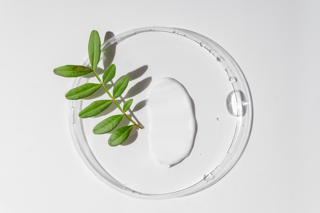
What is bakuchiol?
Bakuchiol is a plant-derived extract obtained from the seeds and leaves of the Babchi plant (Psoralea corylifolia). Babchi has been used for centuries in traditional Chinese and Ayurvedic medicine and has more recently gained attention in skincare for its ability to support skin renewal in a gentler way.
Often described as a natural alternative to retinol, bakuchiol offers similar skin-supportive benefits while being better tolerated by sensitive skin. Its growing popularity is rooted in research, not trends. Gene expression profiling has shown that bakuchiol, despite having no structural resemblance to retinoids, produces a strikingly similar effect on skin cells to retinol.[1]
Why bakuchiol is often compared to retinol
Retinol, a form of vitamin A, is well known for supporting smoother texture, improved tone, and elasticity. However, it can also be difficult for some skin types to tolerate, especially sensitive or reactive skin. Common side effects include dryness, irritation, flaking, and increased sun sensitivity.
When the goal is long-term skin health, aggressive surface-level stimulation isn't always the most supportive approach. Bakuchiol has been shown to offer comparable benefits, such as supporting the appearance of firmness, tone, and even-looking skin, without many of the side effects commonly associated with retinol.
Is bakuchiol as effective as retinol? What the research shows
A 2019 randomized, double-blind clinical study published in the British Journal of Dermatology compared 0.5% bakuchiol cream to 0.5% retinol cream over 12 weeks. Both groups saw significant, statistically similar reductions in wrinkle surface area and hyperpigmentation, but participants using retinol reported meaningfully more facial scaling and stinging than those using bakuchiol.[2]
Earlier gene expression research found a similar pattern at the cellular level: bakuchiol produced effects on skin cell gene expression that closely resembled those of retinol, despite the two compounds having entirely different chemical structures.[1]
Benefits of bakuchiol
Gentle and well tolerated
Bakuchiol is generally well tolerated by sensitive skin and may be suitable for those prone to conditions such as rosacea or eczema. Compared to retinol, it is less likely to cause irritation or dryness.[2]
No increased sun sensitivity
Unlike retinol, bakuchiol does not increase the skin's sensitivity to sunlight. Daily sun protection is still important, but bakuchiol does not require the same usage restrictions.
Considered a safer option during pregnancy
While more research is always encouraged, bakuchiol is widely regarded as a more pregnancy-compatible option compared to retinoids, which are typically avoided during pregnancy.
Incorporating bakuchiol into your skincare routine
Because bakuchiol works in harmony with the skin, it fits easily into both morning and evening routines. It supports smoother texture, improved firmness, and a more even appearance without pushing the skin toward reactivity.
For best results:
- Use bakuchiol once or twice daily
- It can be applied in the morning or evening since it does not increase sun sensitivity
- Bakuchiol pairs well with other supportive ingredients, including vitamin C
- When using an oil-based serum, apply it as the final step to help seal in moisture
Consistency is key. Gentle, steady use allows the skin to respond over time without disruption.
The bottom line
Bakuchiol is a thoughtful option for anyone seeking the benefits commonly associated with retinol, without the irritation that can come with it. For sensitive skin or those focused on long-term skin health, it offers a high-performance, plant-based approach rooted in research.
If you're unsure whether bakuchiol is right for your routine, a personalized consultation can help you navigate ingredient choices based on your skin's needs.
Frequently asked questions
Is bakuchiol as effective as retinol? Clinical research shows bakuchiol and retinol produce statistically similar improvements in wrinkle appearance and hyperpigmentation, with bakuchiol causing meaningfully less scaling and stinging.[2]
Can I use bakuchiol during pregnancy? Bakuchiol is widely considered a more pregnancy-compatible alternative to retinoids, which are typically avoided during pregnancy, though it's always worth checking with your doctor.
Does bakuchiol make skin more sensitive to the sun? No. Unlike retinol, bakuchiol doesn't increase sun sensitivity, though daily SPF is still important for every skin type.
References
- Chaudhuri RK, Bojanowski K. Bakuchiol: a retinol-like functional compound revealed by gene expression profiling and clinically proven to have anti-aging effects. Int J Cosmet Sci. 2014;36:221–230. https://doi.org/10.1111/ics.12117
- Dhaliwal S, Rybak I, Ellis SR, et al. Prospective, randomized, double-blind assessment of topical bakuchiol and retinol for facial photoageing. Br J Dermatol. 2019;180(2):289–296. https://doi.org/10.1111/bjd.16918